
Gender affirming voice blog

All posts
On Thursday, May 1, 2025, 6:30 - 8:00 pm, I will lead a free gender-affirming voice workshop for anyone who is modifying their voice or curious about making voice changes.
Filmmaker Rouven Gueissaz created this short film about Bernie Wagenblast and my client, Jade Stephan, about their experiences with their voices.

The voice in your head may not have a sound to you, but if it does, it may sound more like an undesired, unmodified voice and less like the speaking voice that is changing and serving you better. In that case, aligning your inner voice with those outer changes may help you achieve more overall progress and vocal satisfaction.

Maintaining your chosen voice techniques can be challenging at any level of your gender affirming voice process. Are you starting to practice talking, and find it mentally challenging to think of what to say while also modifying how you sound?
New vocal habits do not require that you push your voice hard. Instead, they demand precision and accuracy.

Have you noticed how your voice and communication can change depending on the situation? How do you talk to a coworker, boss, classmate, friend, family member, coffee shop barista, or pet? What words do you use? How does your voice sound?

Straw phonation, or making sound through a straw, is a common therapeutic exercise for vocal health problems such as vocal strain or tired voice.

Are you on testosterone but still feel unsatisfied with your voice? The pitch may not have dropped enough or there may be other ways you are still using your voice that can be perceived as feminine.

My client Lillian Primrose was featured in this news story in the Guardian on May 20, 2019.

Here is a link to the 4/8/19 episode of Nancy, the critically-acclaimed podcast on WYNC that features stories and conversations about TGBTQ experiences:
https://www.wnycstudios.org/story/nancy-podcast-does-it-bring-you-joy
In this episode, one of the hosts, Tobin Low, a cisgender gay man, discusses how he came to see me in my office in order to verify if he was lowering his pitch on purpose to avoid sounding too feminine, and whether that was the cause of his vocal fatigue and hoarseness.

Knowing exactly how your voice sounds is critical for modifying it in ways that work for you. But let's face it, it can be hard to know how you sound outside your own head. And it can be scary and uncomfortable to hear yourself or embarrassing to get feedback.

Here is a radio news story that was broadcast about my client Alice Gorelick on The Pulse on National Public Radio, as part of the WHYY's series Our Bodies, Our Gender, September 7-8, 2017.

Here is an online news story featuring my client, Rebecca Oppenheimer, and her work with me on your voice, posted on Fusion.net today (8/17/16).

Here is a video done by Laura Lumsden of Cosmopolitan.com about my work with two clients who are transfeminine and gender queer. Congratulations to Angel S. and Alex F. on their successes and a big thanks to them for sharing their stories.

In reaction to Caitlin Jenner’s recent comment about wanting her voice to be more feminine, Korin Miller of Yahoo Health asked me about the nature of feminine voice training.

Changing your voice and communication patterns to better conform to your gender expression can be challenging. This can be met with new, useful, and more satisfying ways of talking.

If you practice and use new ways of talking, these ways will gradually feel more real, both emotionally and physically, as the brain retrains the muscles to produce the desired skills in a more automatic way.
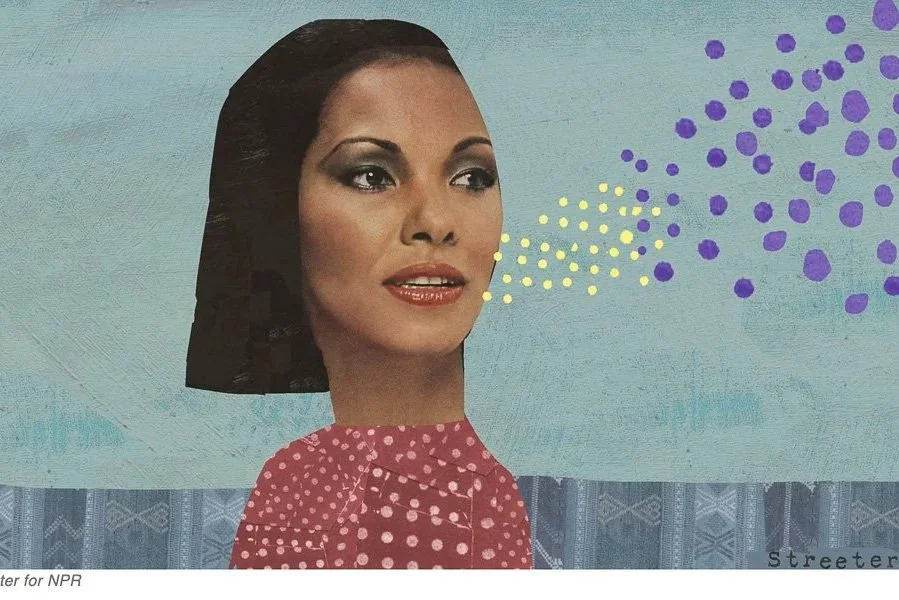
Here is a radio news story that was broadcast on National Public Radio’s All Things Considered on 10/14/14 about my voice work.

This short film by Natalie Ruiz Tofano features the lived experience of my client Alysan McCann, including her voice changes.

Many transpeople have trouble being misgendered over the phone, even when being gendered correctly in face-to-face conversations. This is primarily because the listener doesn’t have the added benefit of seeing the person’s appearance. Below are some recommendations for strategically using your best voice/speech skills when talking on the phone to people unfamiliar to you.

Believe it or not, we can modify the way we laugh, because laughing is a kind of behavior, just like speech is a behavior.

This blog post addresses lip trills further, bringing in target pitch and pitch movement.

Warming up your voice for the day can help to prevent vocal strain, vocal fatigue, or other voice problems.