
TMJ Disorder
Temporomandibular joint (TMJ) disorder can involve reduced or unsmooth jaw movement, clicking of the jaw joint, and/or pain in the muscles that control the range of the motion of the jaw. It can significantly impact ease of speaking, singing, eating, and facial expressiveness. This may be caused by a number of factors, including teeth clenching/grinding, gum chewing, nail biting, or conditions such as fibromyalgia, osteoarthritis, or jaw injury.
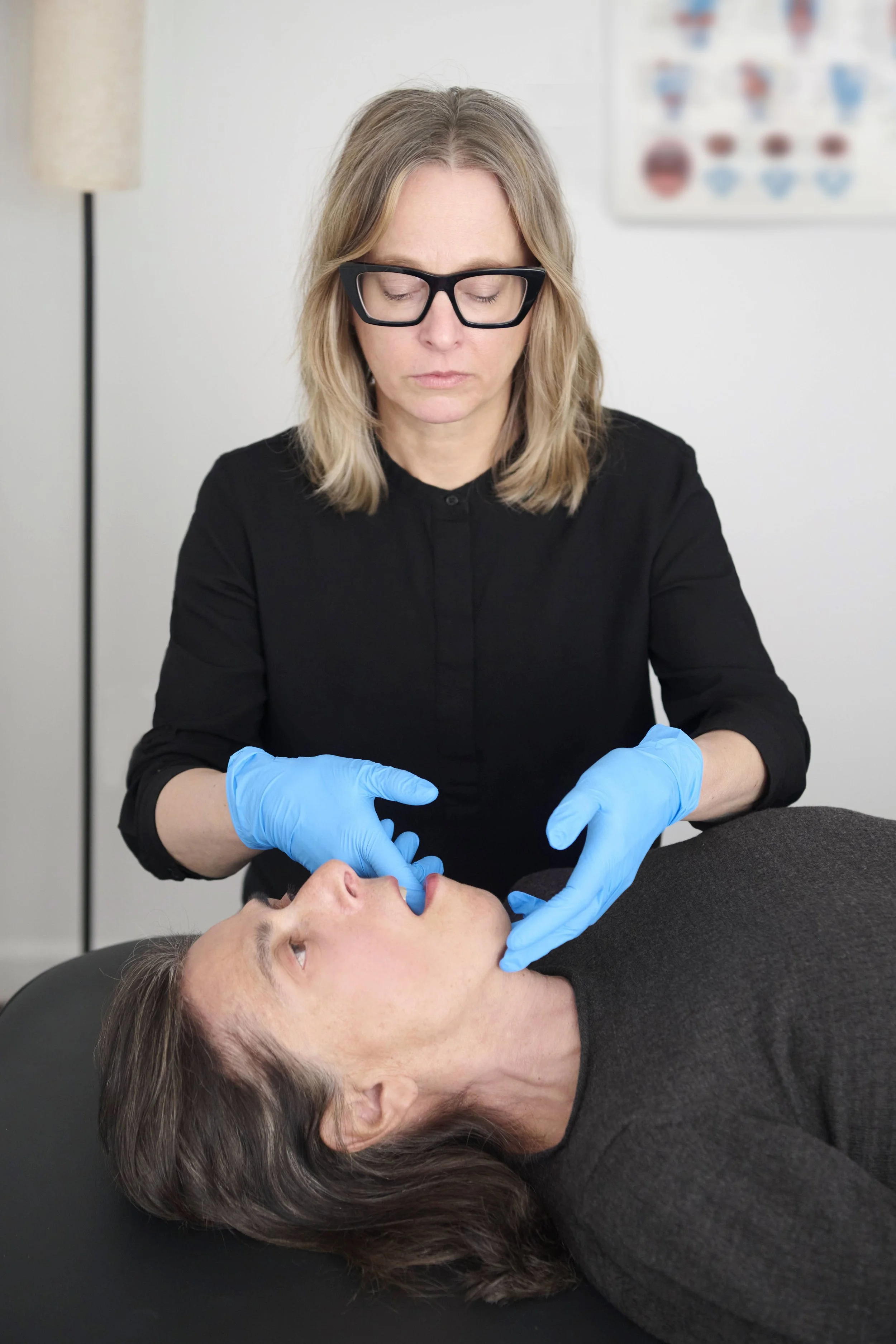
Common interventions include habit modification, an oral appliance, and/or Botox injections. Manual therapy can be done in conjunction with or instead of these treatments, depending on the nature and severity of your condition. It includes massage inside the mouth and on the outside of the jaw to ease tension in the muscles that open and close the jaw or surround the jaw.
Initial assessment and intervention involve you lying down on a massage table and giving feedback regarding sensation and comfort level. This could be done in a series of sessions that are either separate or integrated into sessions that target voice, speech, and/or swallowing.
This work is part of a larger manual therapy modality that targets tension that affects communication and swallowing.